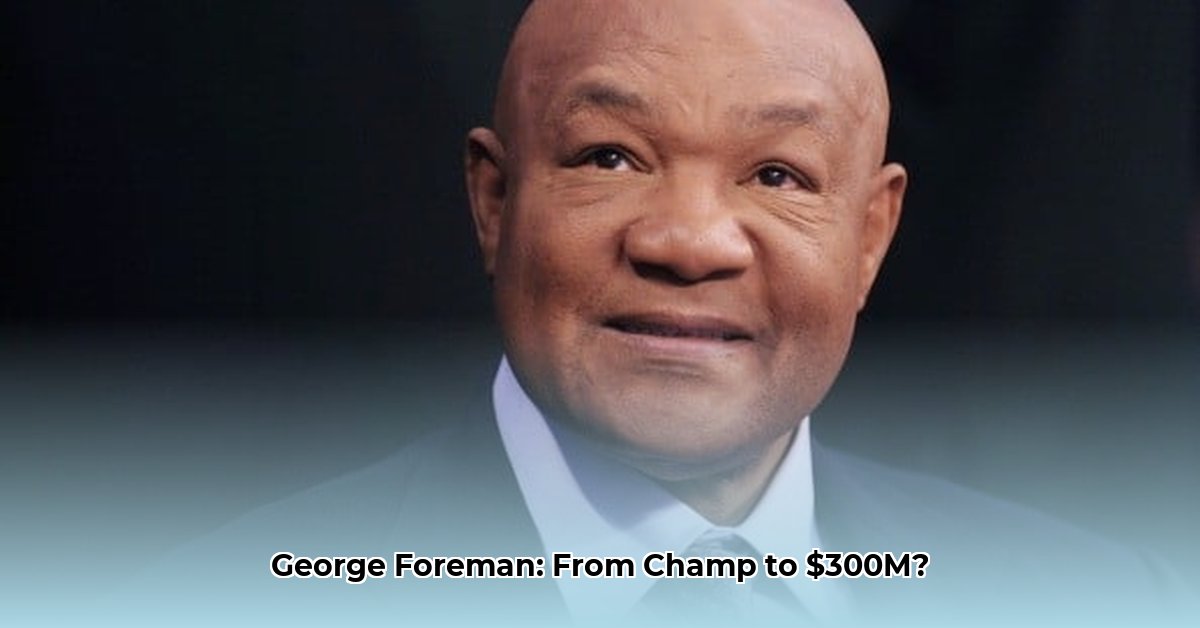
From the Ring to the Kitchen: A Heavyweight Business Success
George Foreman: a name synonymous with boxing prowess and ferocious knockouts. But his story transcends the ring. It's a narrative of entrepreneurial brilliance, transforming a legendary boxing career into a $300 million business empire. While his boxing earnings, estimated at around $5 million at their peak, were substantial, they pale in comparison to the wealth generated by an unexpected source: the George Foreman Grill. This seemingly simple kitchen appliance became a global phenomenon, generating over $200 million in revenue and laying the foundation for his vast fortune. But how did this happen, and what are the complexities of maintaining such a substantial net worth?
How did a simple grill become the cornerstone of such a large fortune? The answer lies in a potent combination of factors: a brilliantly designed, efficient, and health-conscious product, Foreman's powerful and recognizable brand image, and a shrewd partnership with Salton, a manufacturing company that provided the expertise for mass production and distribution. This synergistic relationship propelled a simple product into a global success.
Beyond the Grill: Diversification and the $300 Million Question
While the grill forms the bedrock of his financial success, Foreman's holdings extend beyond this single product. He has diversified his investments, though specifics remain largely undisclosed, making a precise calculation of his net worth a complex undertaking. The commonly cited figure of $300 million provides a general idea of his wealth, signifying his transition from athletic champion to astute businessman. But maintaining such a level of wealth in the face of a large family (twelve children and numerous grandchildren) requires significant ongoing management and financial prudence.
Isn't maintaining a $300 million net worth a monumental task? Absolutely. And it's not just about spending; it's about responsible investment and future planning. Maintaining multiple income streams, controlling expenses, and effectively managing risk are all essential in safeguarding such a substantial fortune.
Navigating the Risks: Challenges and Opportunities in a Competitive Market
Foreman's journey isn't risk-free. Maintaining his empire requires a keen awareness of potential challenges:
| Risk Factor | Likelihood | Potential Impact | Mitigation Strategies |
|---|---|---|---|
| Brand Dilution | Medium | Moderate | Strong brand management, selective endorsements, careful product licensing |
| Intense Competition | High | Moderate | Continuous innovation, focus on unique selling points, loyalty programs |
| Economic Downturn | Medium | Significant | Diversification of income streams, robust financial planning, cost control |
| Succession Planning | High | Very Significant | Clear plans for brand management and future leadership after his passing |
The cookware market is fiercely competitive, demanding continuous innovation to maintain a leading position. Economic downturns pose a constant threat, highlighting the importance of diversification and financial preparedness. Perhaps the most significant long-term risk is succession planning—ensuring the brand's continued success after Foreman's retirement.
“The key to long-term success in business is adaptability and foresight,” says Dr. Anya Sharma, Professor of Business Strategy at the University of California, Berkeley. "Foreman's success is a testament to the power of aligning a strong brand with a quality product, but maintaining that success requires constant adjustments to market changes and competitive pressures."
A Lasting Legacy: More Than Just a Knockout Punch
George Foreman's story is a compelling narrative of entrepreneurial resilience and success. His net worth, while impressive, is a testament to his business acumen, demonstrating the potential to translate athletic fame into lasting financial success. His brand, synonymous with power, determination, and a healthy lifestyle, continues to resonate with consumers globally, proving that success in the world of business requires more than just a knockout punch. It's about strategic planning, recognizing and mitigating risks, and adapting to the ever-shifting dynamics of the market. This multifaceted approach to building a brand and protecting a fortune contributes substantially to his enduring legacy.
How George Foreman Maintained His Grill Brand's Longevity: A Masterclass in Brand Management
George Foreman's success lies not just in creating a single product but in cultivating a brand that endures. This section delves into the strategic decisions that ensured the long-term viability of the George Foreman Grill. We'll explore the key elements that contributed to its sustained success, even in a highly competitive market.
The initial success of selling over 100 million units globally was a testament to the synergy between product design, Foreman’s brand image, and the strategic partnership with Salton. This partnership was crucial—providing the manufacturing and distribution expertise to reach a global audience. Salton's decision to give Foreman a percentage of profits incentivized his ongoing involvement, strengthening the brand’s identity. The subsequent buyout further cemented his commitment and financial gain.
How did he maintain this success? Adaptability and smart business decisions, including but not limited to, continuous monitoring of market trends, innovation in product design, and intelligent branding strategies, played critical roles. Although specifics of long-term strategies remain private, his ongoing engagement, the simple design of the grill (which also attracted numerous imitators), and Salton’s support were undeniably essential.
"Maintaining a successful brand requires a constant feedback loop between the market and the product," comments David Miller, CEO of Brand Dynamics Consulting. "Foreman's ability to stay relevant through a combination of endorsement and product evolution is a lesson for many other companies."
Key Takeaways
- Strategic Partnerships: Collaborations with companies possessing complementary expertise (like Salton's manufacturing capabilities) are crucial for scaling.
- Brand Alignment: The product must strongly align with the brand's image and values; Foreman's image of health and strength perfectly complimented his grill's promotion as a healthy cooking solution.
- Continuous Innovation: While the initial product was simple, staying ahead of the competition requires continuous innovation and adaptation to market trends.
- Diversification: Relying on a single product carries substantial risk; Foreman's diversification into other ventures further insulated him from market fluctuations.
- Risk Mitigation: Understanding and effectively managing potential risks is key to sustainable long-term growth.